
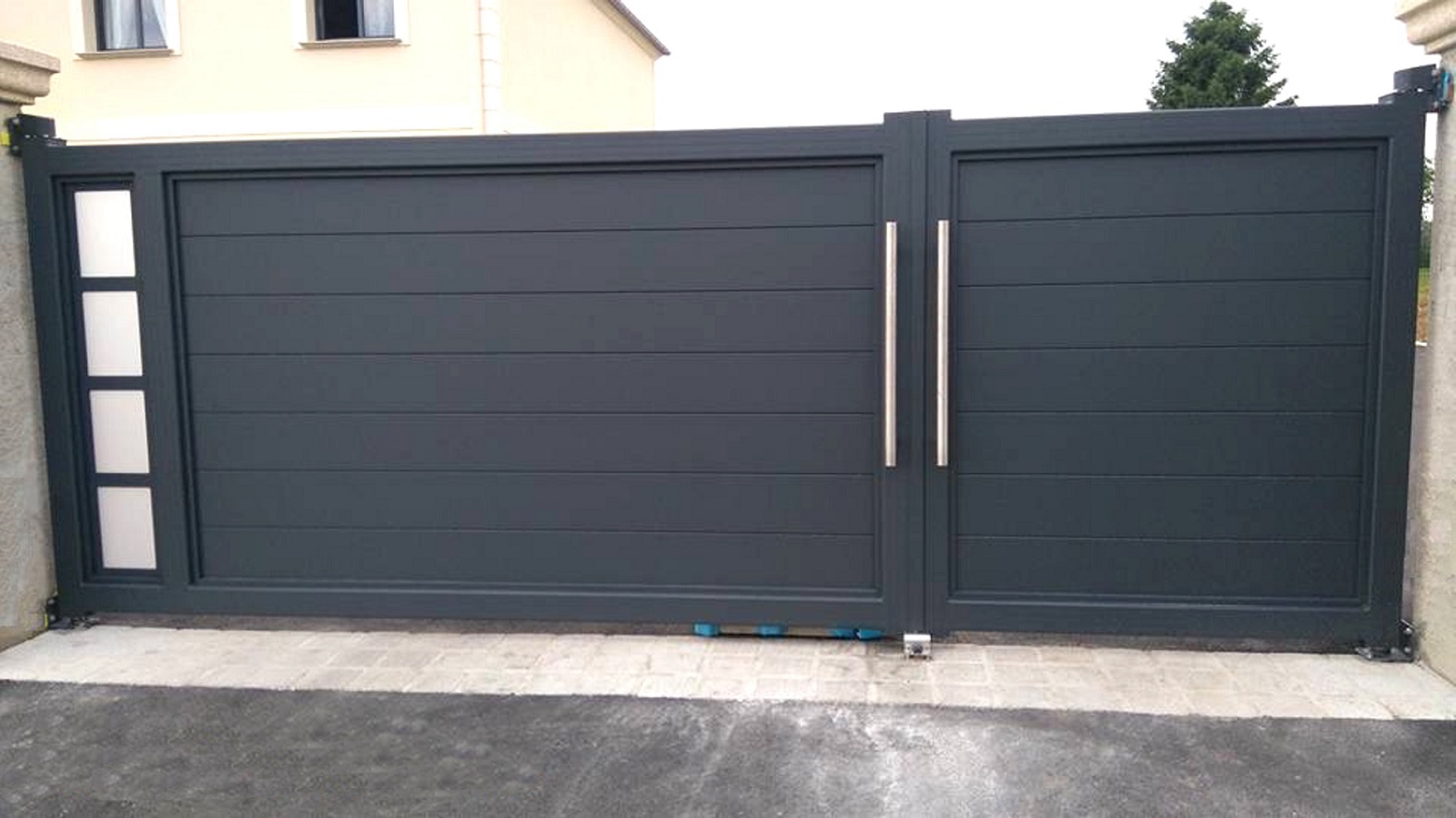
Installing a gate may seem fairly straightforward at first glance, but it requires a certain level of expertise and time. If you are considering installing a new gate, you have the choice between doing it yourself or hiring a professional.
In this article, our experts examine the advantages and disadvantages of each option to help you make the best decision based on your needs and situation. Whether you are an experienced DIY enthusiast or a homeowner seeking peace of mind, there is a solution for you.
What Does the Law Say?
Beyond height restrictions depending on the municipality where you reside and its population, the main question is: Am I allowed to install a gate myself? The answer is yes.
You are free to enclose your property as you see fit, as Article 647 of the Civil Code states: “Any owner may enclose his property“. However, you must do things properly if you wish to avoid unpleasant surprises, both with your gate and the municipality.
Considered a fencing element, your gate does not require filing a prior declaration of works or a building permit. Nevertheless, special cases mean you will need to submit a specific planning permission application:
- Within the perimeter of a notable heritage site.
- In the vicinity of historic monuments.
- In a classified site or a site pending classification.
- In an area defined by the Local Urban Plan (PLU).
- In a municipality or part of a municipality where the Municipal Council has decided to subject walls to declaration.
Your gate must comply with the Local Urban Plan (PLU) in place, so it is strongly recommended to consult it before beginning your gate project.
The Advantages of Installing My Gate Myself
Obviously the first advantage is financial. Indeed, installing the gate yourself will save you from paying a professional’s labor costs and thus keep funds available to enhance your outdoor space. By installing your future gate yourself, you will control the installation process as well as the duration of the work.
It will also be an enriching experience for you, whether you are an accomplished DIY enthusiast or a novice seeking new things to learn. You will not be constrained by the schedule of the professional you would choose either.
The Advantages of Hiring a Professional
An expert in their field, the professional installer will be able to advise you, unlike the internet which can sometimes provide contradictory information. In addition to professional advice, the installer will also have the appropriate equipment for installation.
With a professional installer, you will save effort in managing all stages of the process, and will enjoy peace of mind thanks to a service guarantee.
How to Install Your Gate Yourself?
First, you will need to take measurements that will allow you to determine whether your property can accommodate a swing gate or sliding gate. Seek advice when purchasing your gate, which will also involve the acquisition or loan of tools suitable for installation.
You will need to carefully follow the instructions and not hesitate to ask for help from your family or friends to accomplish this shared task. When choosing a sliding gate, you will need to pay very close attention to measurements as well as ground leveling.
Choosing Between a Sliding Gate and a Swing Gate
To choose a gate, you will need to balance your preferences and the options available to you. If you want a sliding gate, you will need sufficient length to allow your gate to open and close along your fence or fencing. With a swing gate, the key consideration will be the space required to open each leaf in the best possible manner.
Dans le même thème

Expert in fencing, gates, and outdoor landscaping since 2019.
Holds a Master’s degree in Digital Marketing – SEO, UX/UI.
View LinkedIn profile


