
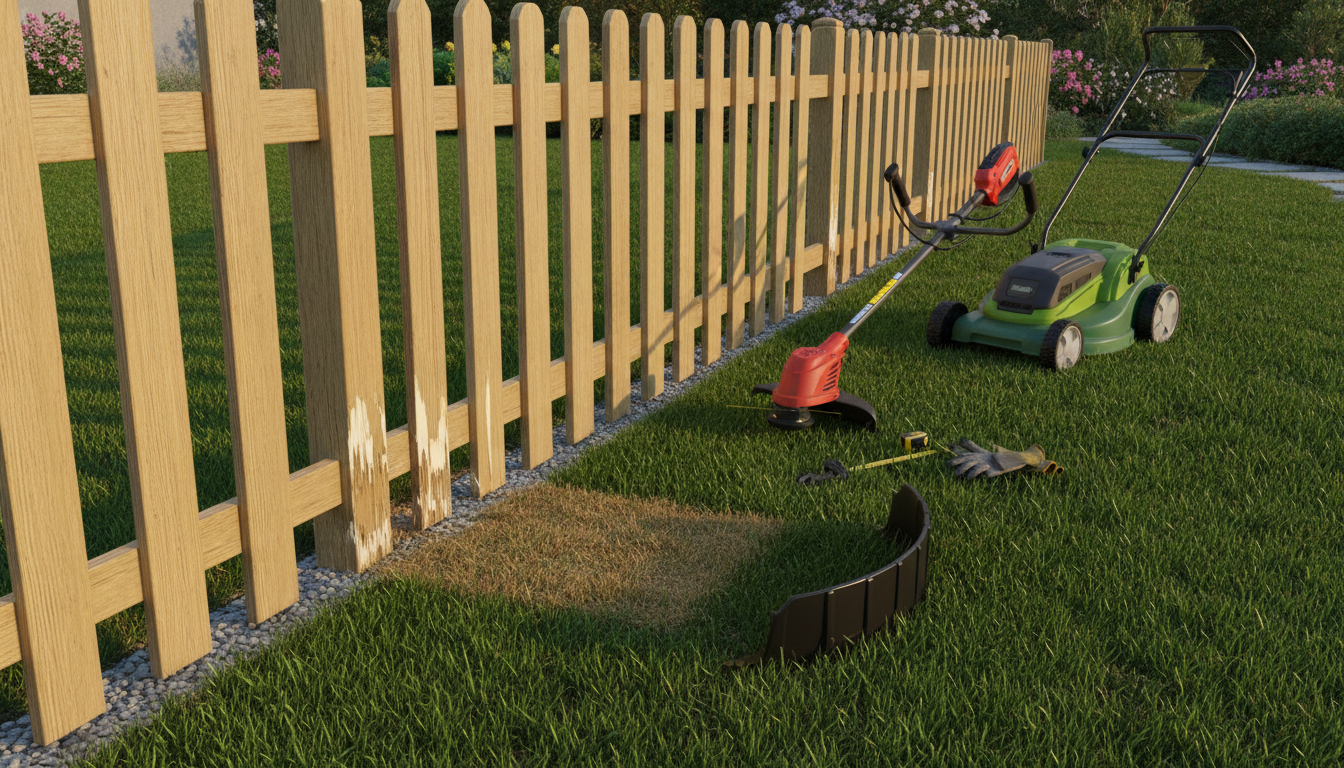
Have you just installed a beautiful fence to define your garden, but lawn maintenance is becoming a headache? Between flying debris, mower wheels rubbing, and the strimmer line hitting the base of the posts, damage can quickly occur. Fortunately, there are simple tips to protect your installations from mowing impacts.
Here is Districlos’ advice to keep your barriers looking new and save you from tedious repairs.
What Your Fences Are Truly At Risk Of
The repeated passage of the strimmer (or string trimmer) and mower is the worst enemy of your fences. The nylon line of the strimmer spins at such a speed that it acts like a real sander: it scratches PVC, chips the paint off rigid mesh, and erodes wooden posts down to the core.
Once this protective layer is damaged, moisture seeps in. The result: rust appears on metal, mold settles on wood, and your fence ages much too quickly.
Create a Clean, Grass-Free Strip
The best way to avoid hitting your posts is simply not to have to mow too close. By creating a clean strip 20 to 30 centimeters wide along the fence, you eliminate the problem at its root.
To fill this space, you have plenty of choices: organic mulch (pine bark, wood chips) or mineral mulch (crushed slate, pebbles, gravel). Not only does this block weed regrowth, but it also gives a neat and structured look to your outdoor areas.
Install Garden Edging
To neatly define this mulched strip and prevent grass from reclaiming its territory, install garden edging. These act as a physical shield: mower wheels will bump against the edging, thus protecting your privacy panels or mesh fence.
Several options are available to you:
- Galvanized steel or Corten steel: very thin strips, almost invisible, that blend in everywhere.
- Concrete or pavers: ultra-resistant, they won’t budge an inch.
- Treated wood: warm, even if it requires slight maintenance over the years.
Pour a Concrete Plinth Under the Fence
If you are looking for a definitive solution to never have to think about it again, a concrete plinth under the fence remains the benchmark. Poured directly into the ground (ideally during installation, but feasible afterwards), this small concrete strip, about ten centimeters wide, slightly elevates the fence.
You can then pass the mower blade just above the concrete to cut the last blades of grass without risking touching the structure. It’s a bit of work initially, but offers royal comfort with every mow.
Adjust Your Tools and Mowing Technique
Sometimes, a simple change of habit is enough. When approaching posts, lower the engine speed of your strimmer. A line spinning at a moderate speed will cause significantly less damage if it brushes against a support.
For delicate finishes, you can also forgo the petrol strimmer in favor of manual shears. If you are committed to your electric device, check if it has a protective guard or a spacing shield: this accessory keeps the line at a safe distance from your installations.
Anticipate When Purchasing Your Fence
If your fence project is still in the planning stage, take the opportunity to choose the right materials. Rigid panels made of plastic-coated galvanized steel withstand small accidental impacts much better than simple flexible mesh or soft wood.
At Districlos, we often recommend adding concrete plinth boards under your rigid panels. These slabs absorb strimmer blows, mower impacts, and gravel projections without flinching, protecting the metal or privacy section of your fence from damage.

Experte clôture, portail et aménagement extérieur depuis 2019.
Diplômée en Master de Marketing digital – SEO, UX/UI
Voir le profil sur LinkedIn


