

Installing a fence on the edge of a forest can meet various needs: protecting your property from wild animals, preserving privacy, or clearly demarcating your land. However, choosing an appropriate fence must take into account the specific characteristics of this type of natural environment.

Challenges of Installation on a Forest Border
A property located on the edge of a forest is exposed to several constraints. Wild animals, such as wild boars, deer, or foxes, can cause damage if your land is not sufficiently protected.
Attacks by large herbivores, such as cervids, can also cause damage to vegetation, so it is essential to protect young trees and shrubs well. Climatic conditions, such as humidity or strong winds, are also factors to consider, as they can weaken fencing materials.
Furthermore, aesthetics play an important role: a fence bordering a forest should ideally blend harmoniously with the surrounding natural landscape. It may be wise to favor materials that age well and develop a natural patina over time, thus enhancing the authenticity of the space.
The Most Suitable Materials for a Forest Environment
The choice of materials is crucial to guarantee the durability and effectiveness of your fence. Wood is often preferred for its natural appearance, which blends perfectly into a wooded environment.
However, it is crucial to choose wood treated against humidity and insects to prevent it from deteriorating too quickly. Treated cedar and pine offer better resistance to moisture, making them particularly suitable for forest environments.
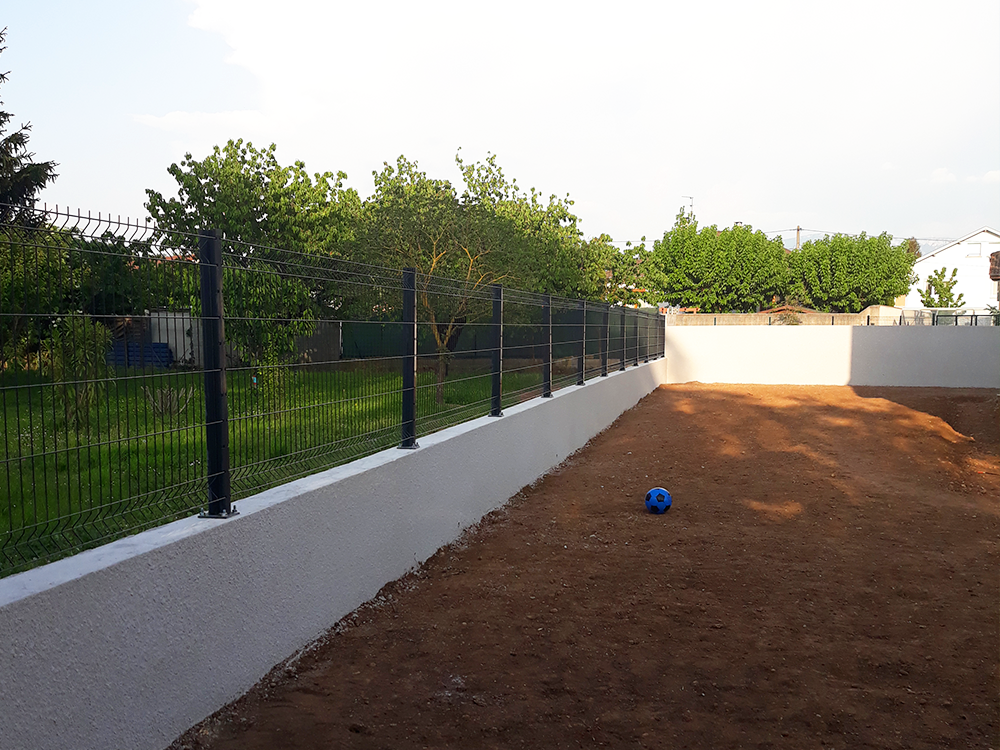
Metal, particularly mesh fencing or galvanized steel fences, is a robust option that withstands bad weather and animal intrusions well. For better aesthetic integration, it can be combined with natural hedges. It may be necessary to reinforce mesh fences, especially in areas where particularly powerful animals, such as wild boars, might try to rub against them.
Finally, aluminum fences offer a good compromise between aesthetics and durability, while requiring little maintenance. This type of fence is ideal for those looking for a durable yet aesthetic solution with low maintenance.
Height and Design: Essential Elements
In addition to the material, the height and design of the fence must be adapted to your specific needs. If the priority is to protect your land from animals, a tall fence, up to 1.80 m or more, may be necessary.
To prevent small animals such as rabbits or foxes from accessing your property, it is advisable to opt for a fence with tight mesh, which prevents their passage. It is also possible to integrate a solid base to prevent burrowing animals from penetrating under the fence.
Moreover, the design of the fence should be conceived to harmonize with the forest environment. Simple and natural models are often the most suitable. Be sure to choose neutral or natural colors to avoid visual intrusions into the natural landscape.
The Importance of Maintenance for a Durable Fence
A fence installed on a forest border is more exposed to humidity, impacts caused by branches, and ground movements. Regular maintenance is therefore essential to preserve its solidity and appearance.
For wooden fences, it is recommended to apply a water-repellent and insecticide treatment every two to three years. Metal fences should be checked to prevent rust, while composite fences simply require occasional cleaning to remove debris and moss. Inspecting the fence foundation also helps identify and repair any degradation before it becomes a major problem.
Dans le même thème

Expert in fencing, gates, and outdoor landscaping since 2019.
Holds a Master’s degree in Digital Marketing – SEO, UX/UI.
View LinkedIn profile


