

Choosing a durable fence goes far beyond simply marking out your property. It is a practical way to help protect the environment, notably by reducing your ecological footprint and encouraging building practices that are more respectful of the planet. Wood fencing, natural privacy screens, composite slats, or even a living fence—we will explore the various eco-friendly fencing options available to you!
The benefits of eco-friendly fences
Choosing an eco-friendly fence offers many benefits that go beyond simply marking out your property. Here are some of the main advantages of opting for a durable, environmentally friendly fence:
- Reduced carbon footprint: Eco-friendly fences are often made from recycled materials or renewable resources. This reduces the amount of greenhouse gas emissions generated during the manufacture and transport of traditional materials.
- Preservation of natural resources: By selecting durable materials such as FSC-certified wood, bamboo, or recycled materials, you help preserve forest and mineral resources, notably by reducing demand for virgin raw materials.
- Creating natural habitats: Living fences such as hedges, trellises for climbing plants, and green walls provide habitats for local wildlife. They encourage biodiversity by offering space for insects, birds, and other animals.
- Long-term durability: Eco-friendly materials are often chosen for their durability. Sustainable fences withstand weather, wear, and damage better, which means you do not have to replace them as often—reducing waste over the long term.
Choosing an eco-friendly fence goes beyond simple installation. It is a smart choice that helps protect the environment, encourages more sustainable practices, and creates an outdoor space that is both functional, attractive, and planet-friendly.

Using sustainable materials for your fence
There are several environmentally friendly materials you can choose for building durable fences. Here are some of the most commonly used and eco-responsible materials for an environmentally friendly fence:
- FSC-certified wood: Wood from sustainably managed forests and certified by the Forest Stewardship Council (FSC) is a popular choice for eco-friendly fences. Trees are managed responsibly, thereby minimizing the impact on forest ecosystems.
- Recycled materials such as recycled plastic or composite materials: Made from recycled fibres mixed with resin, they can be used to manufacture durable fences. They reduce demand for virgin raw materials.
- Corten steel: Corten steel is a durable material that develops a corrosion-resistant patina over time, making it suitable for outdoor fencing. It requires little maintenance and can be recycled at the end of its service life.
- Living fences: Living fences such as hedges, trellises for climbing plants, and green walls are made up of living plants. They provide a natural habitat for wildlife, absorb carbon dioxide, and improve air quality.
- Straw and reeds: In some regions, straw and reeds can be used to create eco-friendly fences. These materials are renewable and biodegradable.
Our advice: When choosing a material for your eco-friendly fence, consider not only its durability and environmental impact, but also how well it blends with the look of your outdoor space.
Natural privacy screens: a warm atmosphere for your outdoor space
There are several types of natural fences available on the market to create boundaries that are eco-friendly and attractive. Here are some of the most common natural fences:
Reed screening: made from round bamboo or split reed, reed screening is a lightweight privacy screen that helps define your space and adds a zen touch to your terrace, balcony, or garden. It provides natural privacy while still letting light through. It creates a warm atmosphere and protects against wind. Easy to install, it is lightweight and versatile. As a natural material, reed screening can deteriorate over time. It requires more maintenance than a synthetic privacy screen. Clean it regularly with soapy water, protect it from bad weather, and apply a wood preservative treatment. Replace it if it becomes excessively worn, and take care with winter storage in harsh climates.

Heather screening: eco-friendly or rustic? In both cases, it helps create shaded areas and can be fixed to any type of support. Easy to install, heather screening is often very popular. In short, it offers excellent natural privacy while keeping a rustic look. In addition, it creates a natural atmosphere and supports biodiversity. It is weather-resistant, lightweight and durable. Heather screening may require extra maintenance to prevent deterioration due to outdoor exposure. It can also degrade over time.
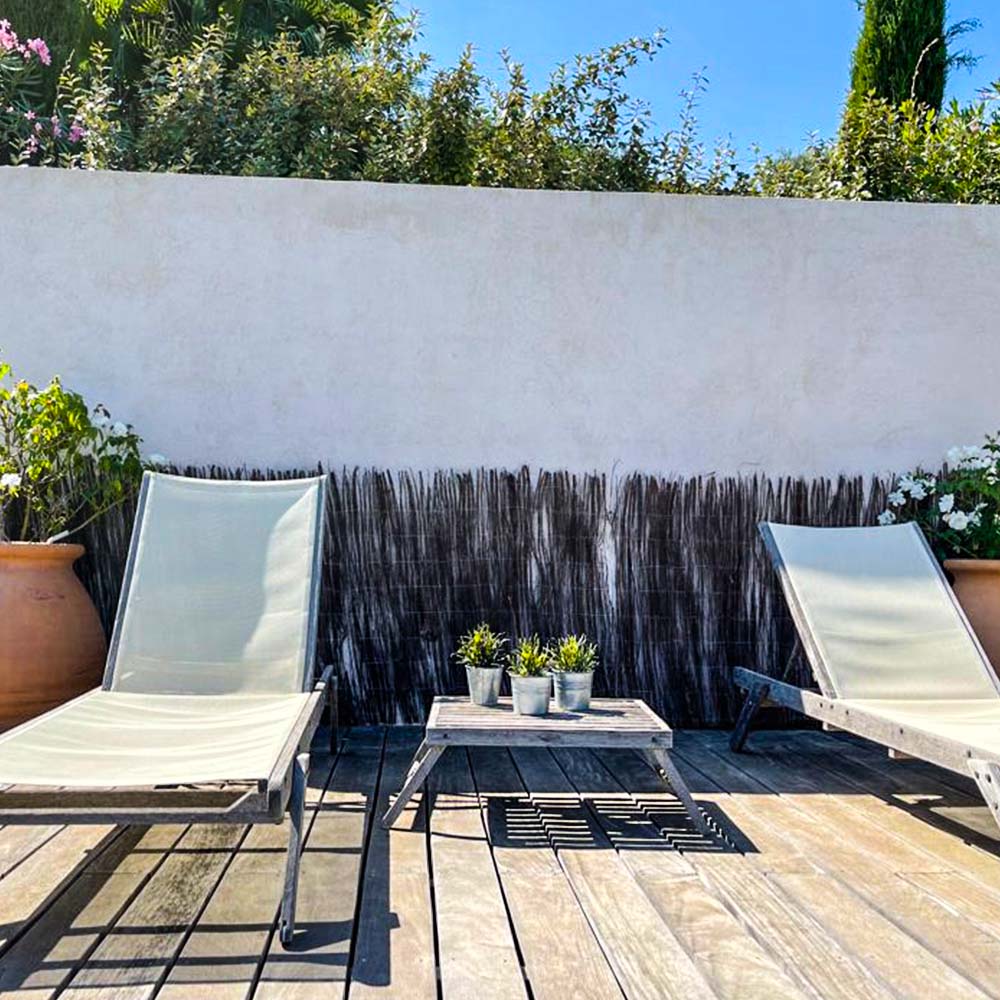
Hazel panel: made from untreated hazel wood, it is ideal for a natural, discreet look in your garden. Hazel panels provide natural privacy thanks to their dense structure. They have a rustic, attractive appearance and blend well into natural settings. Hazel is durable and weather-resistant. Hazel panels may require periodic maintenance to prevent rot and wear. They can also deteriorate over time, especially in harsh climates. Inspect the panels regularly for any signs of damage. Apply a wood preservative treatment to protect against weather-related deterioration. Remove debris and dirt to maintain their appearance and durability. Also consider replacing damaged panels to maintain the fence’s integrity.

Tiger willow: made from plant material, willow is biodegradable. With no chemical products used, tiger willow protects you from overlooking while respecting the environment. It offers natural privacy thanks to its dense weave. Its rustic, handcrafted look adds charm to the setting. It is lightweight, durable, and weather-resistant. Willow stems can wear over time, so clean them regularly with soapy water and a dedicated treatment.

Natural living hedges: woven hedges, trellises for climbing plants, or green walls—there are many alternatives if you have a green thumb. By regulating temperature and filtering the air, they could not be more eco-friendly. Living hedges may require regular trimming to maintain their shape and density. Their growth may be slower when first installed, and some species may require specific care. Trim regularly to maintain the desired height and density. Water and fertilize according to the plant’s needs. Remove dead branches and wilted leaves to encourage healthy growth.

By identifying both the advantages and disadvantages of natural fences, and by taking appropriate maintenance measures, you can enjoy their natural look and functionality to enhance your outdoor space.
Fences made from recycled materials: a welcome trend!
Choosing a fence made from recycled materials offers several environmental and durability benefits, making it an important option to consider. The recycled materials used in fences help reduce demand for new virgin raw materials, which eases pressure on natural resources and fragile ecosystems. In addition, using recycled materials gives new life to waste and end-of-life materials, notably by reducing the amount of waste sent to landfill and promoting responsible waste management. Manufacturing recycled materials generally generates fewer greenhouse gas emissions and less pollution than producing new materials, helping to reduce the carbon footprint. In short, choosing a fence made from recycled materials helps protect the environment, notably by reducing the use of natural resources, minimizing waste, and limiting negative impacts on the climate. It is a step towards a more planet-friendly lifestyle and a way to encourage more sustainable practices in outdoor landscaping.
Tips for installing a durable fence
Choose durable materials such as FSC-certified wood, recycled metal, or eco-friendly composite materials. It is also best to avoid chemically treated materials that could have a negative impact on the environment. It is essential to ensure that the fence installation aligns with sustainable building practices, which helps minimize waste and potential environmental impacts. If you are considering living fences, it is recommended to choose local species suited to your region’s climate to ensure their survival and healthy growth. To extend the life of the fence wood, it is best to treat it with wood preservative products to prevent rot and prolong its service life. Also plan a regular maintenance schedule for your fence, which may include steps such as painting, varnishing, or other necessary treatments to protect the materials.
If you are in a situation where you need to replace an existing fence, consider recycling or reusing the materials as much as possible. By following these recommendations, you can successfully install a durable fence that not only meets your practical needs, but also helps protect the environment and promotes long-term sustainability.
Inspiration for eco-friendly outdoor landscaping
To landscape your outdoor space in an eco-friendly way, it is crucial to make thoughtful, responsible choices at every stage of the process. This includes selecting native, drought-resistant plants, adopting organic gardening practices, and reducing lawn areas to minimize water consumption and chemical products. By using durable, eco-friendly materials for structures, decks, and fences, and by integrating elements such as rainwater harvesting, energy-efficient lighting, and relaxation areas with durable furniture, you can create an outdoor space that reflects a commitment to protecting the environment while offering a welcoming, natural atmosphere.
Here are a few ideas for creating a stylish outdoor space while staying eco-friendly!
- Green roof on a pergola or on a garden shed
- Composting area to turn your waste into fertilizer and nutrients
- Birdhouse, feeders, and insect hotels
- Chestnut paling or garden edging to define spaces
- Garden clothesline to replace your conventional tumble dryer
- Decking made from FSC-certified wood or recycled materials
- Solar lighting to reduce energy consumption
- Creative recycling by repurposing objects
By combining these ideas, you can transform your outdoor space into an environment that respects nature, looks great, and remains functional.
Dans le même thème

Expert in fencing, gates, and outdoor landscaping since 2019.
Holds a Master’s degree in Digital Marketing – SEO, UX/UI.
View LinkedIn profile


