
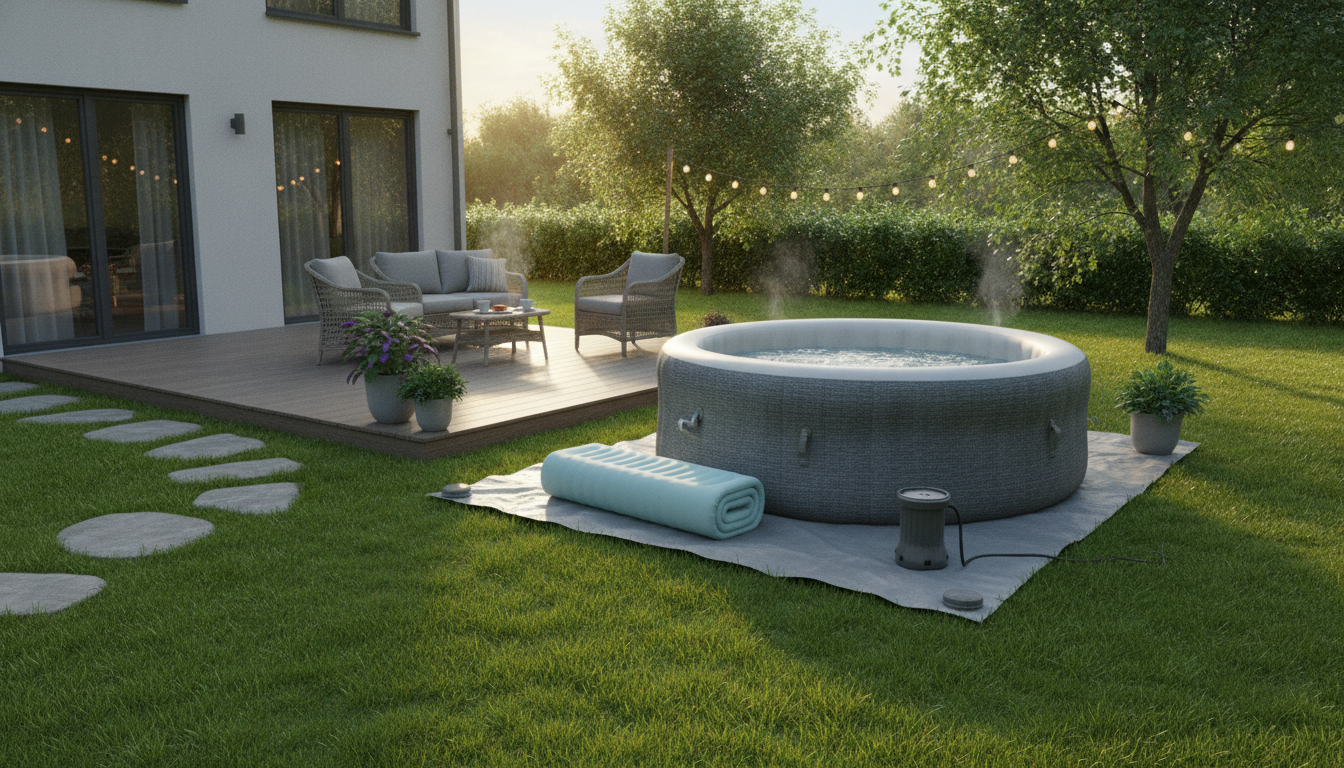
Do you dream of splashing around in warm water at home without spending a fortune on a built-in spa? An inflatable spa is a great solution. Easy to install, portable, and much cheaper than a hard-sided model, it transforms your garden into a relaxation area in just a few hours. But be careful: a poorly placed spa leads to stability issues, water that cools down too quickly, and a rising electricity bill. Here is how to do things correctly.
Choosing the right location
The location matters immensely for your comfort. Choose a flat, stable spot sheltered from the wind. A corner of the garden exposed to drafts will cause the water temperature to drop and the pump to run at full power to compensate. Also, consider the proximity of a standard electrical outlet: an inflatable spa consumes a lot of power, and running a fifteen-metre extension cord through damp grass is never a good idea.
Avoid installing it under a tree. Leaves, resin, and insects will constantly fall into the water, and you will spend more time cleaning than relaxing. Also, keep some distance from the neighbours: a well-placed privacy screen or screening panel makes all the difference in enjoying your spa peacefully.
Preparing a solid support
The weight of a filled inflatable spa is always surprising. Expect between 800 kg and over a tonne once the water and bathers are inside. The ground must therefore be perfectly stable and capable of supporting this load without sinking. Place it directly on a terrace, a concrete slab, or well-compacted ground.
Forget direct installation on grass or soil: the weight will deform the ground and destabilise the spa. The best option remains a flat, hard surface covered with an insulating ground mat. The latter protects the bottom of the spa against unevenness and limits heat loss from below.
- A concrete slab: the most durable and stable solution
- A reinforced wooden deck capable of supporting the load
- Compacted ground with an insulating mat for temporary installations
Planning for water supply and drainage
No one wants to fill a 1,000-litre spa with a bucket. Install it within reach of a garden hose for filling. For drainage, plan for an evacuation point: a gutter, a rainwater manhole, or a simple natural slope towards an area that can handle the water.
Also, think about end-of-season drainage. Depending on your region, treated water cannot always be discharged just anywhere. Check local regulations before pouring everything into the garden, especially if you use significant amounts of chlorine or bromine.
Securing the area around the spa
A spa involves warm water and electricity in close proximity. Electrical safety comes first: always plug your installation into a socket connected to a 30 mA residual current device (RCD). This is non-negotiable, especially outdoors where humidity is constant.
If you have young children or pets, clearly define the area. A removable fence or light mesh prevents unsupervised access. Also, remember to cover the spa with its cover as soon as you are finished using it: this prevents accidental falls and keeps the water clean and warm for longer.
Enhancing the layout and privacy
A spa placed in the middle of a short lawn is functional but not very inviting. A few adjustments change everything. Wooden decking around the spa prevents walking in damp grass, and a small wall or screening panels create a real cocoon. You can enjoy your soak without feeling exposed.
Privacy matters immensely. No one truly relaxes under the gaze of neighbours. A woven privacy screen, an artificial hedge, or composite panels enclose the space while dressing up the garden. This is often the investment that changes everything for enjoying the spa serenely, day or night.
Maintaining the water and equipment
An inflatable spa requires regular but simple maintenance. Check the water pH two to three times a week, adjust the treatment (chlorine or bromine), and clean the filters every seven to ten days. Well-balanced water stays clear, does not irritate the skin, and preserves the life of the pump.
Regarding temperature, maintaining the water at 37-38°C constantly is expensive. If you use the spa mainly at weekends, leave the insulating cover in place and plan for the temperature rise a few hours in advance. In winter, in cold regions, it is better to drain it completely rather than risk frost damaging the walls and the circuit.
Considering regulations
Good news: an inflatable spa does not require any planning declaration in the vast majority of cases. It is considered removable equipment, unlike an inground pool. You can install and dismantle it freely according to the seasons.
Still, remain vigilant if your municipality or co-ownership imposes specific urban planning rules. Some housing estates regulate the installation of equipment visible from the street. A look at the local regulations will save you any unpleasant surprises, especially if you plan to add a permanent structure around the spa.
Need to arrange the space around your spa for more privacy and safety? Districlos supports you with a wide range of fences, mesh, privacy screens, and screening panels, available online or in our network of stores throughout France. Entrust us with your project.

Expert in fencing, gates, and outdoor landscaping since 2019.
Holds a Master’s degree in Digital Marketing – SEO, UX/UI.
View LinkedIn profile


