
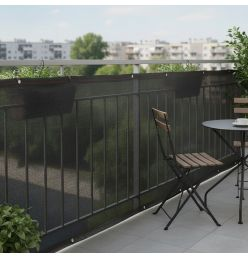
Your garden, terrace, or balcony is your personal space to relax and share moments with family, without worrying about prying eyes.
The key to this peace of mind? An effective and attractive privacy screen!
But with all the available solutions—fabric, reed screening, heather, panels, PVC, aluminum—how can you be sure you’re making the right choice?
What level of screening should you choose? What height is permitted? And how do you install it correctly so it withstands the wind?
Don’t worry! The Districlos experts have designed this guide to answer all your questions and help you find the perfect privacy screen for your project, budget, and preferences!
The Essentials for Choosing Your Privacy Screen
For those in a hurry, here is a summary of the key points for choosing your privacy screen.
Key points to remember:
Your needs: Are you looking to block the view (screening), reduce wind (windbreak), or simply decorate (aesthetic)?
The support: A flexible wire fence will only accept lightweight solutions (fabric, thin reed screening). A rigid wire fence or sealed posts allow for screening and heavier solutions (heather, panels, composite).
Materials: We distinguish between natural materials (heather, reed screening, wood) for authenticity, and synthetic materials (HDPE fabric, PVC, aluminum, composite) for durability and low maintenance.
Regulations: Consult your local planning regulations before making any purchase. They specify the permitted heights, colors, and materials in your area.
Why Install a Privacy Screen?
Before getting into the details, we need to discuss your needs. When you think about it, a privacy screen serves more than one purpose.
You can install screening to:
- Gain privacy
- Protect from wind
- For its aesthetic appeal
- Define a space
Screening is the most common need. What could be more natural than wanting to shield yourself from neighbors or the street to enjoy your pool, your terrace meal, or simply read a book in peace?
However, certain models also serve as windbreaks, particularly technical fabrics, which are designed to significantly reduce wind force. This is the ideal solution for improving your comfort when you’re in your garden or on your balcony.
But a privacy screen can also have an aesthetic purpose! They can transform a bare wire fence or simple enclosure into a decorative element in its own right (wood effect, designer color, natural appearance).
Finally, screening can also serve to structure your garden, separating the vegetable patch from the relaxation area, for example.
The 5 Essential Criteria for Choosing Your Privacy Screen
This is where your project truly takes shape. To refine your selection down to the ideal model, here are all the criteria to consider.
1. The Level of Screening
Screening is the ability of your privacy screen to block the view. Opacity is often expressed as a percentage.
- Low screening (less than 70%):
- Use: Primarily decorative or for light filtering. Ideal for reed or wicker screening that lets light through.
- Effect: Filtered, play of shadows.
- Medium screening (70% to 85%):
- Use: The most common choice for a good compromise. Shapes can be made out without being clearly distinguished.
- Effect: Privacy maintained without a feeling of confinement. Typical of standard fabrics or double-sided PVC reed screening.
- High screening (85% to 99%):
- Use: For near-total privacy.
- Effect: Recommended for highly exposed areas (pool, busy street). This includes high-weight HDPE fabrics and thick heather screening.
- Total Screening (100%):
- Use: A true visual “wall” to completely block the view.
- Effect: Achieved with solid panels (Aluminum, Composite, PVC) or slats woven into a rigid wire fence.
Screening filter buttons
2. The Material and Desired Effect
This is the broadest criterion, influencing style, durability, and price. There are natural privacy screens, artificial ones, solutions halfway between fencing and screening…
Natural Solutions
- Heather screening:
- Effect: Rustic, natural, very dense.
- Screening: High to total (depending on thickness).
- Advantages: Very durable (10-15 years), eco-friendly, excellent landscape integration.
- Disadvantages: Heavy, higher price.
- Reed screening (reed, bamboo, wicker):
- Effect: Light, exotic, warm.
- Screening: Low to medium. Split bamboo is more screening than reed.
- Advantages: Very affordable price, easy to install, lets light through.
- Disadvantages: Shorter lifespan (a few years), fragile.
- Wood panels/trellises:
- Effect: Classic, robust, structural.
- Screening: Total (solid panels) or low (open trellis).
- Advantages: Very solid, can serve as support for climbing plants.
- Disadvantages: Requires maintenance (stain, paint) to prevent graying and rot.
Synthetic Solutions
- Woven fabric (HDPE mesh):
- Effect: Modern, discreet, technical.
- Screening: Medium to high (depends on “weight” – g/m²). Aim for at least 220 g/m² for good screening and 300 g/m² for premium.
- Advantages: Excellent value for money, UV-treated, rot-proof, easy to install (with eyelets), wide choice of colors.
- Disadvantages: Wind catch (if poorly installed), less “natural” appearance.
- PVC (slats or panels):
- Effect: Clean, contemporary.
- Screening: Total.
- Advantages: Easy to clean, durable, often in kits (slats to weave into a rigid wire fence).
- Disadvantages: Can fade or become brittle over time (low-end), “plastic” appearance.
- Composite (wood composite):
- Effect: Perfect wood imitation, designer.
- Screening: Total.
- Advantages: Combines wood aesthetics without the maintenance. Very durable, rot-proof.
- Disadvantages: High price, heavier to install (requires robust posts).
- Aluminum:
- Effect: High-end, designer, very modern.
- Screening: Total (solid panels or slats).
- Advantages: Does not rust, very lightweight, lifetime durability, no maintenance.
- Disadvantages: The highest price on the market.
Artificial Solutions
- Artificial hedge (strands or foliage):
- Effect: Hedge imitation (cypress, ivy, laurel).
- Screening: High.
- Advantages: Green all year round, no maintenance, no growth time.
- Disadvantages: Variable quality (look for UV and fire treatment), appearance can look “fake” if low-end.
| Material | Screening Level | Estimated Durability | Maintenance | Budget | Pros | Cons |
|---|---|---|---|---|---|---|
| Reed Screening (Reed/Wicker) | Low (50-70%) | 2-4 years | None | $ | Price, light natural appearance | Fragile, low screening |
| Privacy screen fabric | Medium to High (80-99%) | 5-10 years | Easy (soapy water) | $$ | Value for money, choice | Wind catch, “modern” appearance |
| Heather screening | High to Total (90-100%) | 10-15 years | None | $$$ | Very durable, rustic appearance | Heavy, price, odor (new) |
| PVC slats (rigid) | Total (100%) | 10-15 years | Easy (sponge) | $$ | Perfect screening, modern | On rigid wire fence only |
| Artificial hedge | High (90-99%) | 5-10 years | None (dusting) | $$$ | Green all year, no maintenance | Variable UV quality |
| Wood panel | Total (100%) | 10-20 years (if treated) | Regular (stain) | $$$ | Warm, robust | Mandatory maintenance |
| Composite panel | Total (100%) | 20+ years | Easy (sponge) | $$$$ | Wood aesthetics without maintenance | Price, installation (heavy) |
| Aluminum privacy screen | Total (100%) | 25+ years | None | $$$$$ | Designer, lifetime durability, lightweight | Highest price |
3. Height: Screening Without Confinement
The height of your privacy screen depends on both your support and your need.
- 1m to 1m20: Ideal for low walls, balconies (railings), or to define a space without completely blocking the view.
- 1m50: Standard height for a garden fence. Blocks the view when you are seated.
- 1m80 to 2m: The most requested height for total privacy, even when standing. This is the “nosy neighbor” solution par excellence.
Warning: Height is highly regulated; always check the local planning regulations for your area before purchasing. We will return to this shortly.
4. The Color of Your Privacy Screen
Choosing the color of your privacy screen is no small matter. Too light, too dark, not natural enough, too rustic…
- Neutral tones (Anthracite Gray, Black, Taupe):
- Effect: Very modern, designer. Anthracite gray (RAL 7016) is the best-seller. It brings out the greenery of your garden.
- Use: Contemporary homes, fabrics, aluminum/composite panels.
- Natural tones (Green, Brown, Beige):
- Effect: Integration into the landscape. Green blends with vegetation, brown/beige recalls wood or heather.
- Use: Ideal for fabrics and reed screening that need to be discreet.
- “Material effect” tones (Wood, Brushed Aluminum, Corten):
- Effect: Imitation. Composite and PVC panels offer convincing “wood effect” finishes.
- Use: When you want the aesthetics without the maintenance.
5. Price
Solutions can be classified by price range (per linear meter, installation not included):
- Entry-level:
- Reed screening
- Woven fabric (low weight)
- Entry-level PVC reed screening
- Mid-range:
- Woven fabric (high weight, 300 g/m²)
- Heather screening (medium thickness)
- PVC slats for rigid wire fence
- Artificial hedge (good quality)
- High-end:
- Wood panels (Treated Pine)
- Heather screening (very thick)
- Premium:
- Composite panels
- Aluminum panels
- Exotic wood panels
What Type of Installation for Your Privacy Screen?
A good privacy screen poorly installed is a privacy screen that won’t last. Enemy No. 1? Wind.
On What Support Should You Install Your Privacy Screen?
- On a rigid wire fence (panels): This is the ideal support. It is solid and does not deform. Perfect for fabrics, artificial hedges, and essential for slats to weave.
- On a flexible wire fence (roll): This is possible, but more delicate.
- Do: Choose a lightweight privacy screen (fabric < 250 g/m², reed screening).
- Don’t: Install heavy heather or 100% screening fabric, which would turn your fence into a sail and tear it away at the first gust of wind.
- Tip: Reinforce the tension of your flexible wire fence with tension wires and additional tensioners before installing the privacy screen.
- On a balcony or terrace: Use cable ties (Rilsan/Colson type) or coated wire to attach the privacy screen to the railing. Ensure it is perfectly taut.
- In panels (Aluminum, Composite, Wood): They do not attach to a fence; they replace the fence. They require robust posts, sealed in concrete.
Essential Tools
- Wire cutters
- Staples and a stapler (for fabrics on wire fence)
- Galvanized or coated wire
- UV-treated cable ties (Rilsan)
- A tape measure and level (especially for panels)
The Mistake to Avoid: Wind Catch
The more screening your privacy screen provides, the more wind catch it has. If it is attached to a fragile support (old fence, poorly sealed posts), it risks tearing everything away.
The strength of your installation must be proportional to the screening level of your privacy screen. In very windy areas, favor “permeable” solutions (reed screening, low-weight fabric) or invest in sealed posts and an ultra-robust support.
What About Regulations?
Don’t install anything before reading this! Neighborhood and planning rules can be quite strict, even if everything isn’t as complicated as it seems.
Local Planning Regulations
This is your reference document, available at your local planning office or on your municipality’s website. Local planning regulations may impose:
- A maximum height for fences and privacy screens (often 2m60 in towns with fewer than 50,000 inhabitants and 3m20 in others, but local regulations take priority)
- Specific materials (e.g., PVC prohibition)
- Permitted colors (to ensure visual harmony in the neighborhood)
- Distances from public roads
Is a Prior Declaration of Works Required?
- No, if you are adding a privacy screen (fabric, reed screening) to an already existing fence and you are not modifying its height or external appearance significantly.
- Yes, if you are creating a new fence (panels, low wall + privacy screen) or if you are significantly modifying an existing fence.
When in doubt, a call to your local planning office will save you considerable trouble.
What About Neighbors? (Shared Boundaries)
- The fence is on your property: You are free to dress it on your side as you wish (in compliance with local planning regulations).
- The fence is on the neighbor’s property: You cannot attach anything to it without their written authorization.
- The fence is shared (on the boundary between the two properties): Installation and maintenance costs are shared. You must have their agreement to attach a privacy screen. If they refuse, you will need to install your own privacy screen on your property, set back from the shared fence.
FAQ: Frequently Asked Questions About Privacy Screens
The most common height for total privacy is 1.80m to 2m. However, for a balcony or low wall, 1m20 to 1m50 may suffice. Always check the maximum height permitted by your local planning regulations before choosing.
“Permeable” solutions are the best. Woven fabrics (HDPE), designed to filter wind without blocking it, are ideal. Natural reed screening (reed, wicker) also lets air through. Paradoxically, 100% screening solutions (solid panels, PVC slats) have the most wind catch and require the most robust support (sealed posts).
Yes, but with caution. You must choose a lightweight privacy screen (low-weight fabric 250 g/m², reed screening). Heavy solutions such as thick heather screening or panels should be avoided, as they would tear your fence away at the first gust of wind! Also ensure your tension wires are properly taut.
Generally no, if you are adding a privacy screen (fabric, reed screening) to an already existing fence without modifying its height. However, yes, you will need a prior declaration of works if you are constructing a new fence (panels, low wall + privacy screen) or if you are modifying the height of an existing fence.
Reed screening (reed, bamboo, wicker) is lightweight, economical, and offers low to medium screening (filtered appearance). Its lifespan is shorter. Heather screening is much denser, heavier, and offers high to total screening. It is more expensive but also much more durable (10-15 years).

Experte clôture, portail et aménagement extérieur depuis 2019.
Diplômée en Master de Marketing digital – SEO, UX/UI
Voir le profil sur LinkedIn


