
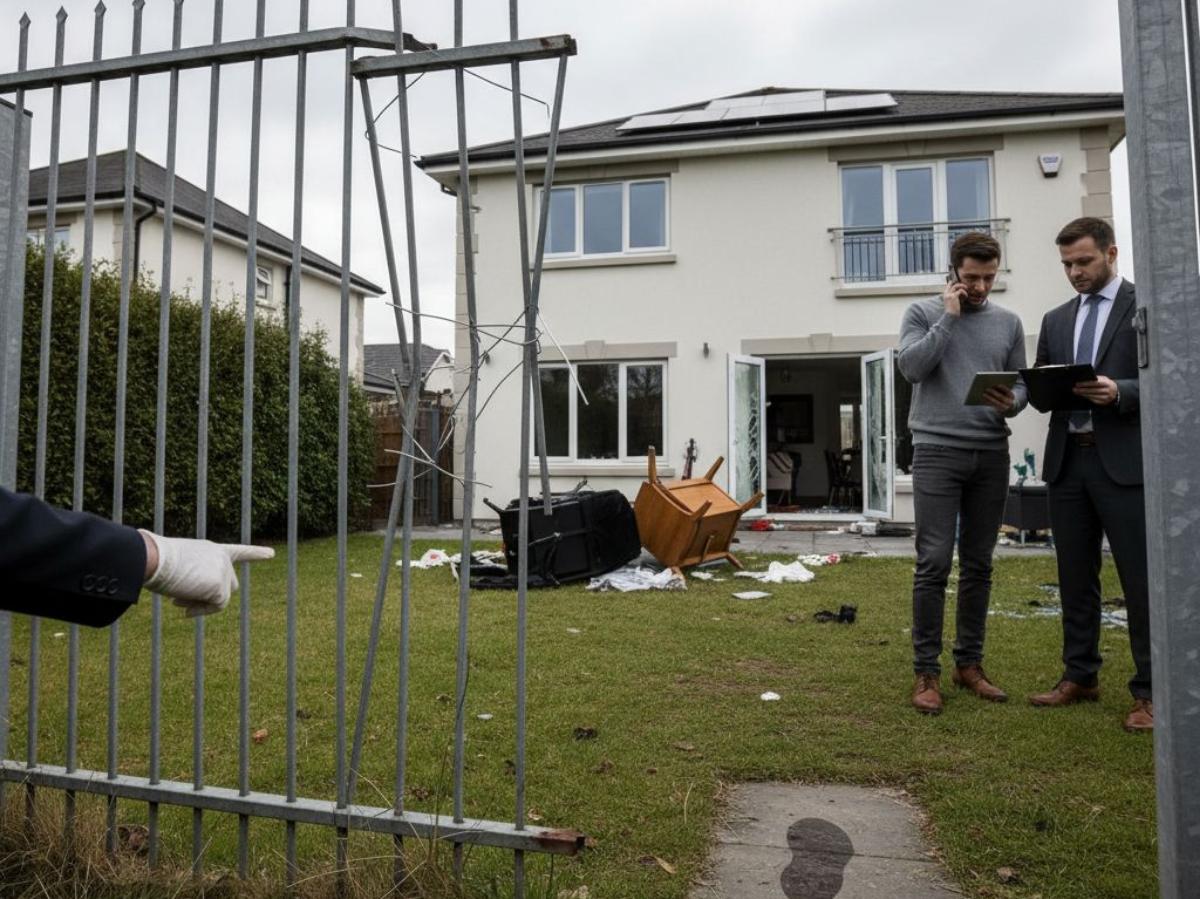
You’ve installed a solid fence to protect your property, but a burglar still managed to get in? This is the scenario every homeowner dreads. Beyond the shock of the intrusion, an administrative and financial question quickly arises: how does your home insurance cover this claim? Between the damage caused to the fence itself and the goods stolen from inside, the rules for compensation often depend on precise contractual details that tend to be overlooked…
Is the fence considered part of the house?
For most insurers, a clear distinction exists between the main building (your house) and outdoor fixtures. While your multi-risk home insurance (MRH) contract systematically covers break-ins through doors and windows of the dwelling, protection for fences and gates is not always automatic. These elements are located on the “periphery” of the main risk.
Often, these installations fall under the “property improvements” guarantee or require a specific extension to be compensated in case of damage. If your contract is limited to the walls of the dwelling, you might be covered for the theft of items inside the house, but not for the replacement of your cut mesh fence or forced gate. It is therefore essential to verify whether your outdoor structures are indeed included in your insured property capital.
The importance of signs of forced entry on your fence
To activate the theft guarantee, the insurer generally requires material proof of forced entry. If the burglar simply climbed over your rigid mesh fence without damaging it, the company might argue that there was no characterized forced entry on the exterior, which can complicate the coverage of stolen items if no other trace is visible on the house.
Conversely, a cut flexible mesh fence, a broken gate lock, or damaged rigid mesh panels are tangible elements. These material proofs demonstrate the use of force or tools to penetrate the property’s enclosure. These visible signs of forced entry not only facilitate the coverage of your fence repairs (if covered) but also corroborate the reality of the burglary for the entire claim.
Check your contract’s exclusions
Never assume that “everything is covered.” Many basic contracts exclude damage to property located outside the walls of the main dwelling, considering them more exposed. It is crucial to reread your general terms and conditions: have you subscribed to a “garden pack” or “outdoor property” option?
Without this specific clause, the repair of your vandalized or destroyed fence used to access your home will likely remain at your expense, even if the theft inside the house is compensated. Furthermore, the insurance may apply a significant depreciation coefficient if your installation is old, thereby reducing the reimbursed amount for repairs.
Does your fence meet the required safety standards?
Some insurance contracts, particularly those covering valuable items or high movable capital, impose strict prevention measures. Your insurer may condition the theft guarantee on the presence of a fence of a minimum height (often 1.50 m or 1.80 m) or require your gate to be locked with a certified lock.
If your installation does not meet these security criteria mentioned in the special clauses, the insurer is entitled to apply an increased deductible, or even refuse compensation for negligence. This is why choosing a professional fence and installing it according to best practices are not just matters of aesthetics, but of insurance compliance.
Steps to ensure proper compensation
Responsiveness and precision are your best allies after a claim. As soon as you discover the burglary, you must file a complaint with the police or gendarmerie, explicitly mentioning the damage caused to the fence. Then, declare the claim to your insurer within two working days. Above all, do not proceed with any definitive repairs before the expert’s visit or the insurer’s agreement, except for urgent temporary security measures.
To build a strong case, immediately gather:
- The original police report detailing the external forced entry.
- Clear photos of the damage (cut mesh, forced lock) from multiple angles.
- Purchase or installation invoices for your fence to prove its value and age.
- A repair or like-for-like replacement quote from a professional.
A quality fence reassures insurers
Beyond mere compensation, the goal remains to prevent or delay intrusion. An old, rusty, or poorly installed fence offers no resistance and can sometimes be interpreted as a lack of maintenance by insurance experts. Conversely, investing in professional rigid mesh or robust privacy panels demonstrates your diligence in protecting the premises. A quality installation acts as a true deterrent to forced entry, limiting the risks of “opportunity” theft that insurers dread so much.

Expert in fencing, gates, and outdoor landscaping since 2019.
Holds a Master’s degree in Digital Marketing – SEO, UX/UI.
View LinkedIn profile


