
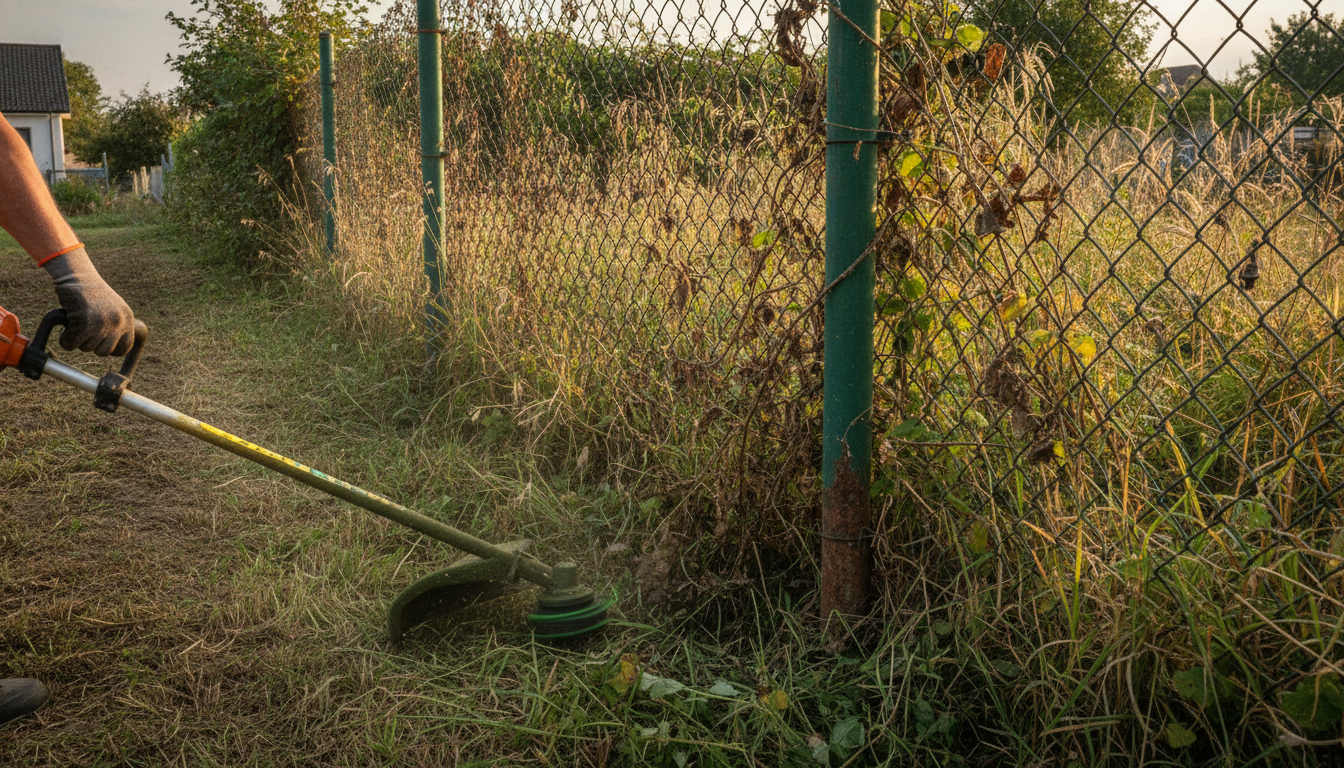
Tall grass and brambles growing at the base of a fence are the kind of detail that transforms well-maintained land into an abandoned area. And this vegetation does more than spoil the landscape: it can damage the mesh, cause posts to rust, or become embedded in the wire. How do you clear brush properly under a fence without damaging the equipment or spending the entire weekend on it? Here are the right tools, the right techniques, and a few tips to limit regrowth.
Why maintain the area under your fence?
A fence marks out a property and protects it, but it also creates a hard-to-reach area where vegetation takes hold. Grasses, bindweed, nettles, or young shrub shoots establish themselves quickly, especially along hedgerows or against chain-link fencing.
The problem is that this vegetation eventually clings to the mesh. Woody stems deform the wire, moisture retained by the grass promotes corrosion of posts and fixings, and mesh overrun with brambles becomes nearly impossible to clean. Regular maintenance of the fence base therefore extends the life of the installation, beyond the simple matter of appearance.
Brush cutter or mower: which to choose?
The choice of tool depends on the type of vegetation and the length to be treated. For a few meters of tender grass, a string trimmer is more than sufficient. For brambles, thick stems, or land left unattended for a long time, you need more robust equipment.
Here is how to identify the right option for your situation:
- String trimmer: ideal for grass, young shoots, and precision work near the mesh.
- Brush cutter with blade or knife: for brambles, dense undergrowth, and woody stems.
- Mower or gas-powered trimmer: for long stretches of fence along fields or meadows.
- Electric edger: practical for small areas and finishing work.
For regular use over a long run, the gas-powered brush cutter remains the most effective: autonomy, power, and the ability to handle anything. Electric or battery-powered models are better suited to small urban properties.
Prepare the ground properly before starting
Before starting the engine, inspect the base of your fence. Stones, bits of wire, debris hidden in the grass: anything lying around can be violently thrown by the string or blade, or damage your tool. A quick preliminary raking avoids unpleasant surprises.
Also identify the fixings and tensioners on the mesh. On chain-link fencing, the trimmer string easily wraps around a stiffener or post and causes a jam. And do not neglect protective equipment: goggles, gloves, closed-toe shoes, and long trousers are essential, especially with a blade.
The right technique for cutting without damaging the mesh
The action that makes all the difference is the orientation of the tool. Keep the string or blade parallel to the ground, and tilt the cutting head slightly to attack the base of the grass. Move slowly along the fence with steady sweeping motions, without forcing.
Near the mesh, slow down and shorten the string. A string that is too long whips the wire, wears out prematurely, and risks marking the plastic coating on the fence. For delicate areas, against a post or fixing, it is better to finish by hand with shears or secateurs. It takes longer, but it avoids string strikes that chip the paint or scratch aluminum.
How to limit regrowth under the fence?
Clearing brush every two weeks—no one wants that. The solution is to prevent vegetation from returning, or at least slow it down significantly. The most durable method remains installing a clean strip at the base of the fence: a strip of concrete, gravel, or slabs that creates a mineral zone where nothing grows.
Mulch or weed-control fabric are also good options. The fabric, laid along the fence and covered with gravel or bark, blocks light and prevents seeds from germinating. It is an initial investment, but one that frees you from the chore for several years. On small areas, a simple grass strip mowed short already makes it easier to pass regularly with the mower or edger.
Maintain your equipment to improve efficiency
A well-maintained brush cutter means faster work and a tool that lasts. After each use, clean the cutting head and remove grass wound around the shaft, which eventually jams the mechanism. Regularly check the condition of the string or the sharpness of the blade: a dull tool works less effectively and strains the motor.
Also take the opportunity to check the tension and condition of your fence. It is the ideal time to spot a post that is moving, a deformed mesh section, or a stiffener that needs retensioning. A fence in good condition is easier to clean and resists vegetation better. And if your installation shows signs of wear, it may be time to upgrade to more durable mesh: at Districlos, our experts help you choose the solution suited to your property.

Expert in fencing, gates, and outdoor landscaping since 2019.
Holds a Master’s degree in Digital Marketing – SEO, UX/UI.
View LinkedIn profile


