
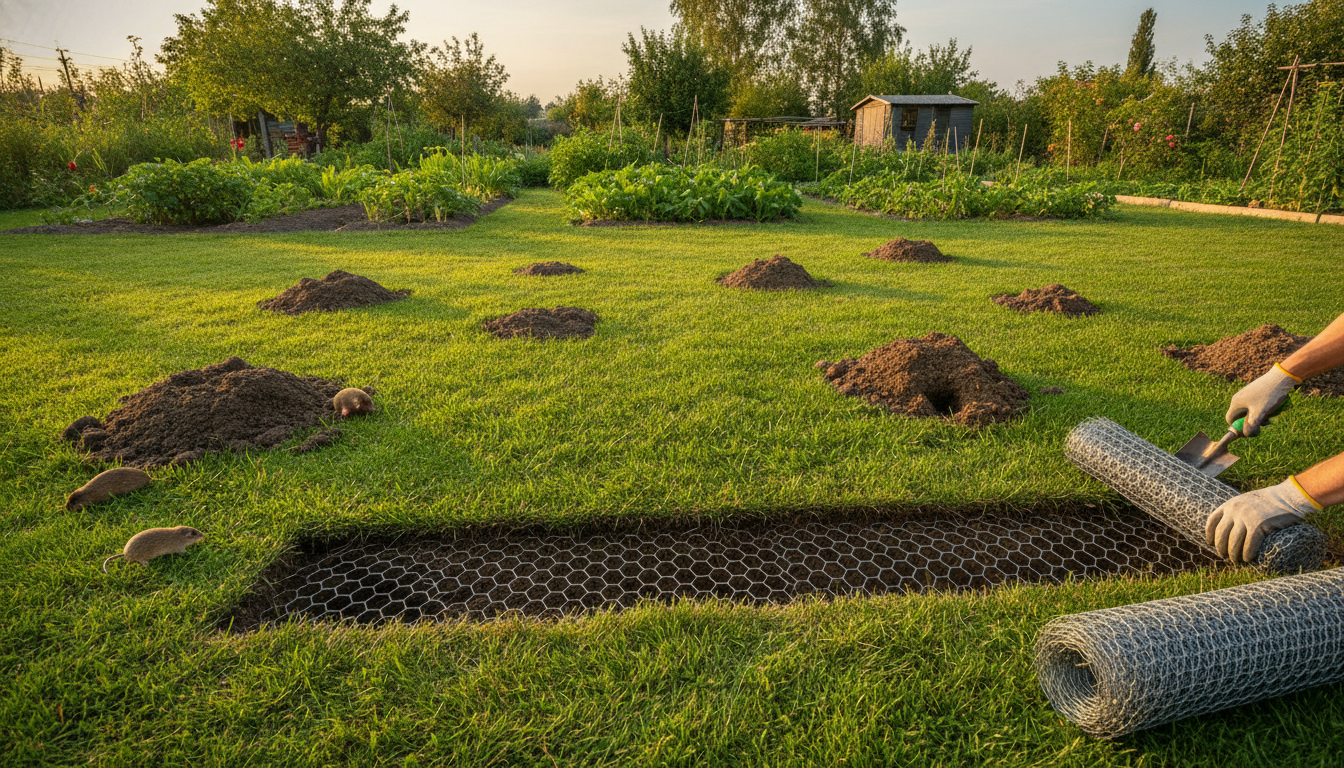
Finding your garden dotted with mounds of fresh earth after spending hours mowing and weeding is always frustrating. Moles and voles can ravage a lawn or vegetable patch in just a few days. To block these tunnels without using chemicals, installing buried mesh is often advised. But is this solution truly effective and durable?
The principle of buried mesh against pests
The idea is simple: place a physical barrier underground or around the perimeter of the land. Unlike scented or ultrasonic repellents, whose effects fade quickly, the mesh physically blocks passage. Moles hit the mesh and must turn back or dig elsewhere.
It is an environmentally friendly method. It does not kill the animals (which remain useful for aerating the soil and eating insect larvae), but diverts them from sensitive areas such as the vegetable garden or ornamental lawn.
What is the actual effectiveness of this barrier?
When properly installed, this system is probably the most reliable for protecting a specific area. Its effectiveness depends primarily on the precision of the installation and the quality of the materials. The slightest gap between two rolls or insufficient depth, and rodents will find a way through.
There are two installation methods:
- Horizontal installation: ideal under a lawn, particularly before sowing or laying turf rolls.
- Vertical installation: perfect along fences to prevent intrusions from neighboring land. It also stops rabbits if the mesh protrudes slightly from the ground.
Which mesh size and material should you choose?
To stop a vole or a mole, the choice of mesh is crucial. A mesh size that is too wide will allow young rodents to pass through, while low-end plastic will quickly be gnawed or degraded by the acidity of the soil.
Two criteria are particularly important:
- Mesh size: choose a tight mesh, ideally 16 x 16 mm or 19 x 19 mm maximum.
- Material: prefer hot-dip galvanized steel. It resists rust and rodent teeth, unlike plastic which eventually gives way under the pressure of pest jaws.
How to install mole-proof mesh effectively?
For effective vertical installation at the property boundary, a trench 50 to 60 centimeters deep must be dug. This is the zone where moles dig their main tunnels.
A small tip consists of folding the bottom of the mesh at 90 degrees outwards (by about 10 cm) to form an “L” shape. If the animal tries to dig under the barrier, it will hit this return. Above ground, let the mesh protrude by 10 to 15 centimeters to block voles that sometimes move in the open air.
Alternatives and complements to protect your garden
If digging such trenches is impossible on your land, other solutions exist. Mechanical traps (such as Putange traps) remain useful for catching a mole already established before enclosing the land.
On the other hand, ultrasonic devices and so-called repellent plants (castor bean, mole plant) yield very inconsistent and rarely lasting results. They can potentially serve as a temporary solution while your work is being carried out.
Choosing the right equipment with a specialist
For this type of project, it is preferable to choose professional-grade materials to avoid having to dig everything up after two years. Districlos offers ranges of mesh adapted for pest protection, with advice on choosing the right steel treatment. You can find these products online or in their stores to plan your protection work and restore order to your garden.

Experte clôture, portail et aménagement extérieur depuis 2019.
Diplômée en Master de Marketing digital – SEO, UX/UI
Voir le profil sur LinkedIn


