 Any questions?

-
-
Menu
-
-
-
-
-
-
-
-
-
-
-
-
-
-
Miscellaneous
-
-
-
-
-
-
-
 Configure your fence
-
-


A question about this product?
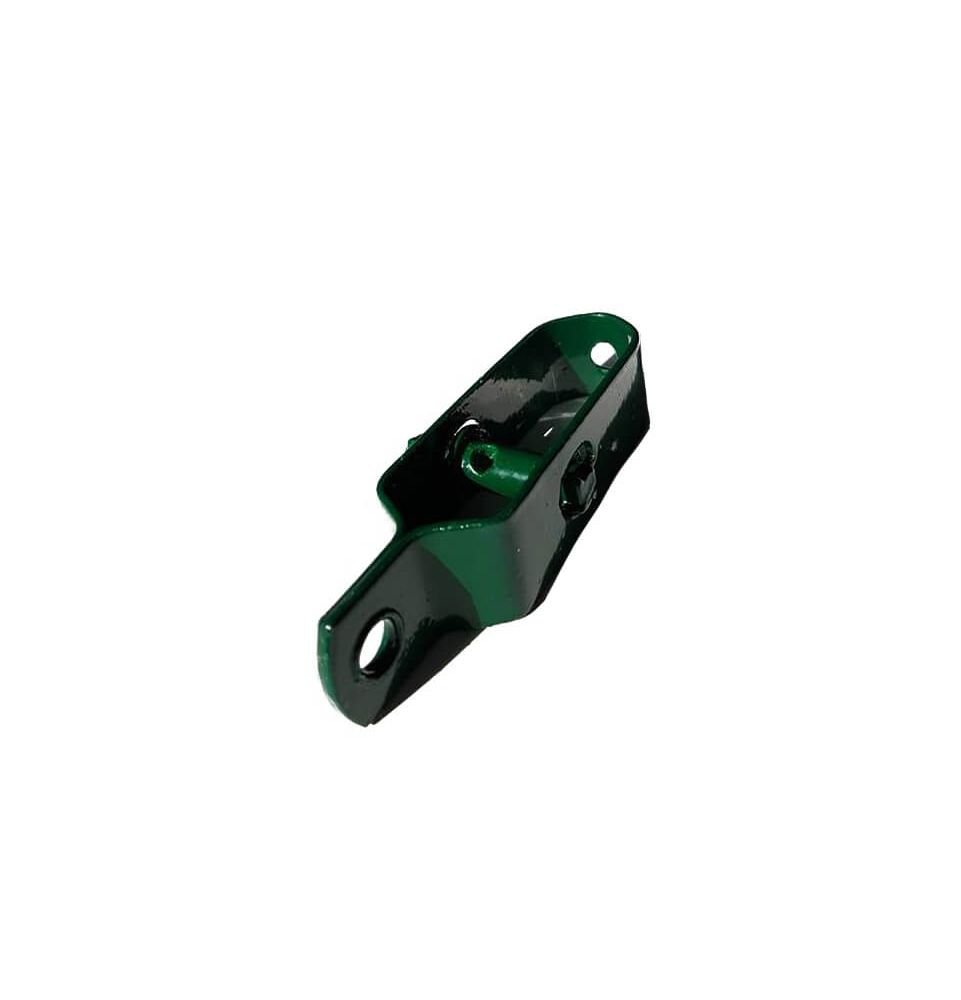
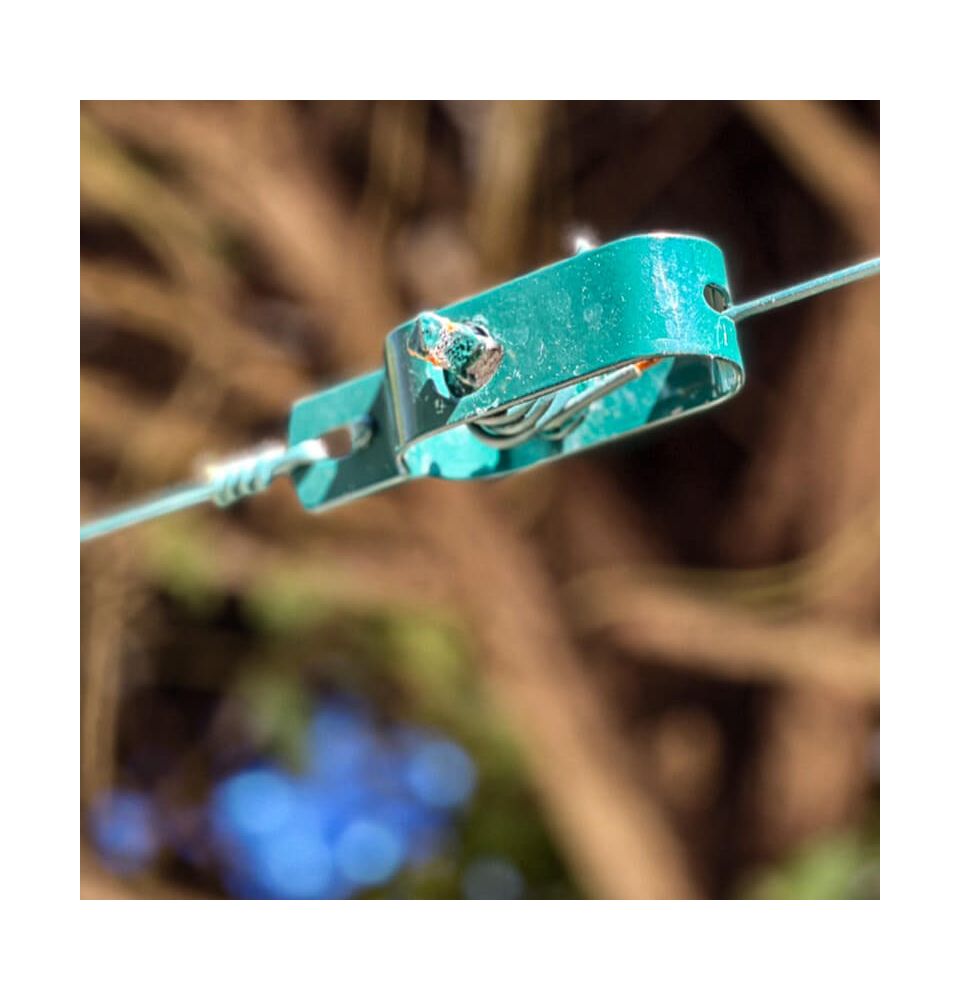
Wire Tensioner for Mesh and Flexible Fencing
This tensioner is designed to tighten wire when installing welded or chain link mesh fencing.
It attaches to T-posts to help keep your fence wire taut and secure.
Guaranteed cheapest product on the web
Found it cheaper elsewhere? We'll refund the difference.

Made in
France & Europe

Flexible Payment Options


10-Year
Anti-Corrosion Warranty

Home delivery
or in-store pickup
Additional Information
This tensioner is an essential accessory for tightening wires on flexible fencing, such as chain link, welded mesh rolls, or decorative border fencing.
To install, position the tensioner near your starting or corner T-post. Begin by leaving about 12 inches of wire from the T-post, attach the tensioner, then feed the tension wire through the tensioner toward the end of your fence line. Finally, use pliers to turn the tensioner's spindle and apply the necessary tension to your wire.
Available in galvanized or coated finishes.
Available colours
Green RAL 6005
Gray 7016
Galvanized
A tensioner is used to tighten the wires when installing welded or chain link mesh fencing. This essential accessory attaches to T-posts to keep the mesh in place and improve the fence's stability. Using a tensioner helps prevent the mesh from sagging or deforming, ensuring your fence stays securely fastened throughout your installation.
You’ll need one tensioner per line of tension wire at each end post, corner post, and every 82 feet. To figure out the total number, multiply the number of wire rows by the number of fence sections. The tensioner size depends on your wire’s diameter: use a No. 2 tensioner for wires under 2.8 mm, and a No. 3 for wires under 4 mm.
The general guideline is to install tensioners every 82 feet for long runs. This spacing helps keep the wire mesh fence evenly tensioned and prevents sagging between end posts. Always place tensioners at corners and starting points, then maintain this 82-foot interval to ensure your fence stays stable.
Start by attaching the tension wire to the end post, leaving about 12 inches of slack. Secure the flat end of the tensioner to the post. Thread the wire through the holes in the line posts all the way to the other end, then connect it to a second tensioner. Use a wrench to turn the tensioner clockwise and tighten the wire, always starting with the bottom wire first.
Insert the wire into the center of the tensioner, then tighten it using an 8 mm open-end wrench. Turn clockwise until you reach the desired tension. The tensioner will lock automatically when properly tightened, ensuring your mesh fence stays secure.
Selecting the right tensioner mainly depends on the type of wire mesh you're installing. For lighter mesh, like standard single twist fencing, a No. 2 tensioner is usually sufficient. For heavier or reinforced mesh, go with a No. 3 or No. 4 tensioner. If you're unsure, check the thickness of your tension wire: the thicker the wire, the higher the tensioner number you'll need to ensure proper tightening.
In the same category
Our customers also bought


Get Districlos news, deals and inspiration in your inbox!
